When Your Walls Start Talking: What Cracks and Peeling Plaster Really Mean

You walk into a room you’ve seen a thousand times… and suddenly you really look at the wall.
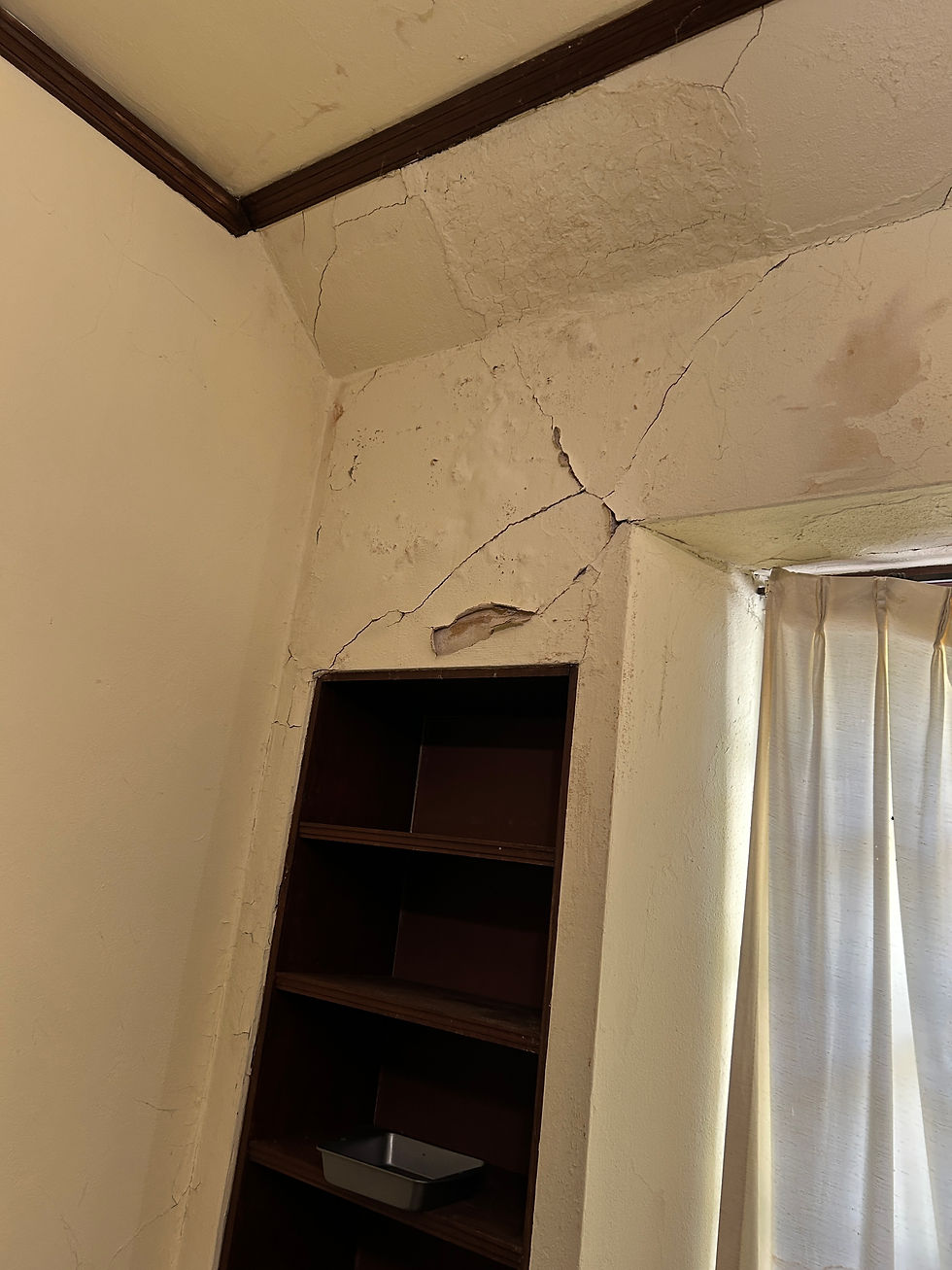
Deep cracks running from the ceiling to the window.Old plaster peeling like dry skin.A corner that feels tired, dark and a little unsafe.
If this photo looks anything like a room in your home, you’re not alone. Many Bay Area homeowners live with walls like these for years, thinking, “I’ll just paint over it someday.” The truth is, your walls are trying to tell you something—and listening now can save you money and stress later.
At Level 7 Construction Inc., we see this kind of damage all the time in older homes around Brentwood and the Bay Area. Let’s break down what’s really going on and what you can do about it.
What this kind of damage is telling you
In the photo above, you can see several warning signs:
Long, branching cracks running from the ceiling toward the window
Thick layers of old plaster or compound peeling away
Stains and discoloration near the window area
Uneven surfaces where someone has “patched” the wall before
This isn’t just “old paint.” It usually means some combination of:
Movement in the structureHouses settle over time. Small hairline cracks can be normal. But deep cracks that follow corners and edges often mean the home has shifted more than usual—or that past repairs didn’t address the root cause.
Moisture problems around windows and exterior wallsWater is the silent enemy of interior walls. Leaky windows, bad flashing, old stucco or roof issues can let moisture in. Over time, the plaster swells, cracks and separates from the wall.
Layer over layer of quick fixesWhen a wall has been patched and repainted many times, the surface becomes thick and brittle. Eventually, gravity wins and sections start to fall.
Cosmetic vs. structural: How worried should you be?
One of the first questions homeowners ask us is:
“Is this just ugly… or is it dangerous?”
Every house is different, but here are a few general guidelines:
Mostly cosmetic damage (ugly but not urgent) usually looks like:
Thin, hairline cracks in random directions
No changes in doors or windows (they still open and close easily)
No soft or damp spots when you press the wall
No bulging or “hollow” sound when you tap the plaster
Potentially serious (time to call a pro) looks more like:
Deep cracks that follow corners, ceilings, or window frames
Cracks you can fit a coin or fingernail into
Sections of plaster that sound hollow or feel loose
Visible sagging or bulging on the wall or ceiling
Doors and windows that suddenly start sticking or not closing right
Water stains, mold or a musty smell
If you recognize more than one item on that second list, it’s definitely worth having someone take a closer look.
Why “just painting over it” doesn’t work
We get it—it’s tempting.
A weekend, a roller and a couple of gallons of paint feel cheaper than “real work.” But with walls like the one in the photo, painting over the problem is like putting a band-aid on a broken bone.
Here’s what usually happens when you just paint:
The loose plaster keeps moving underneath
Cracks reappear within months
New layers of paint start peeling with the old ones
Moisture (if present) continues to damage the structure
Instead of getting a fresh, clean room, you end up frustrated and spending twice: once on “temporary fixes,” and again when you finally do it right.
How we approach walls like this at Level 7
When we see a wall in this condition, we don’t start with spackle. We start with diagnosis.
Our typical process looks like this:
Inspection and questions
How old is the home?
Has this wall been repaired before?
Have you noticed leaks, drafts or condensation near this window?
Do doors or windows nearby stick or drag?
Check for moisture and exterior issuesWe look at the outside: stucco, siding, window seals, roof edges and gutters. If water is getting in, that problem must be solved first.
Remove loose or failed materialWe carefully remove any plaster that’s no longer bonded to the wall. It can look scary at first—you see the “bones” of the wall—but this is the only way to get a stable surface again.
Repair and rebuild the surfaceDepending on the situation, we might:
Patch with compatible plaster or joint compound in layers
Add or replace drywall sections
Reinforce corners and edges so they don’t crack again
Refinish for a clean, modern lookOnce the wall is solid and smooth, we prime and paint with quality materials so you don’t just fix the problem—you actually transform the room.
The goal is not just to hide a crack. It’s to give you a clean, safe, updated wall that will stay that way.
When should you call a professional?
You don’t need a contractor for every little thing. But you should talk to a pro if:
Cracks are getting worse over time
Pieces of plaster are falling off
The damage is around windows, exterior walls or ceilings
You see stains, bubbles or mold
You’re planning to sell or rent the home and need it to pass inspection
Even a short visit can give you peace of mind and a clear plan: fix now, monitor, or combine the repair with a larger remodel (like a full room update).
Turning damage into an opportunity to upgrade
The good news? Walls like this are often the spark that leads to a much better, more functional room.
If you’re already opening up the wall, it might be the right time to:
Improve insulation
Upgrade electrical outlets or lighting
Change the layout of shelving or built-ins
Refresh the entire room with new paint and finishes
In many older homes, the “ugly corner” becomes the before photo in your favorite transformation story.
Ready to stop ignoring that cracked wall?
If your walls are starting to look like the one in the photo—cracked, peeling and tired—it might be time to do more than just patch.
At Level 7 Construction Inc., we help homeowners in Brentwood and the Bay Area:
Diagnose what’s really happening behind the damage
Fix underlying issues, not just cover them
Transform outdated rooms into clean, modern spaces you enjoy being in
Have a wall that worries you?Send us a photo and a short description of your situation, and we’ll help you decide the next step—whether it’s a repair, a full remodel, or simply monitoring it for now.
Comments